See Kristan Ski!

14 Comments

See Kristan Ski!

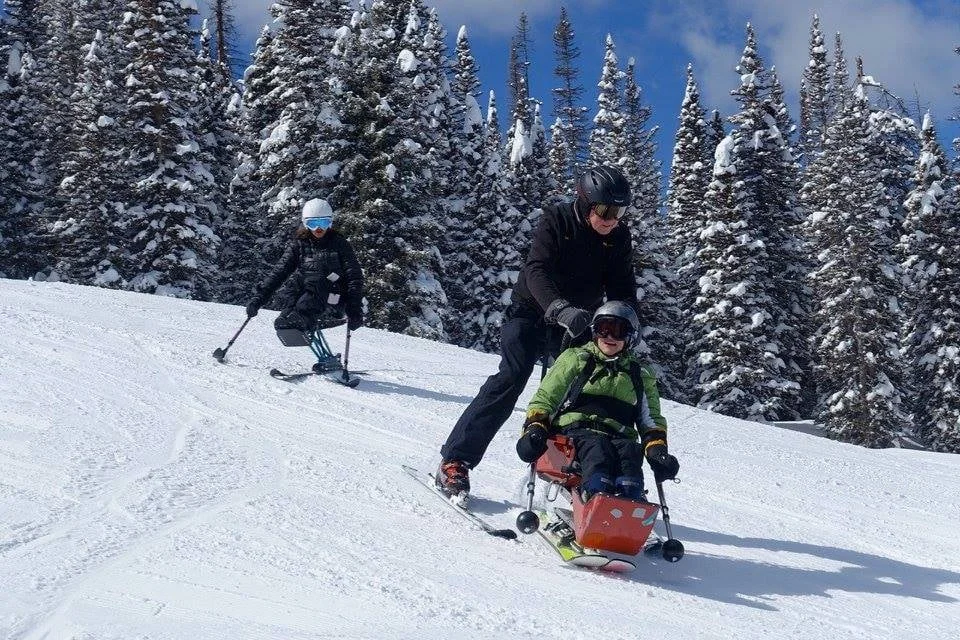
A few months ago, my virtual friend Ian Warshak told me about a program in Colorado that helps people with disabilities learn to ski. He said they were accepting applications, and he sent me the website for the Adaptive Sports Association in Durango. This remarkable organization uses athletic pursuits to enrich the lives of those with disabilities while spreading a message of hope and showing the world all that we are ABLE to do. Their mission is right up my alley, huh? 

ASA Durango offers out-of-state scholarships to athletes with disabilities that include an all-expenses paid trip - airfare, lodging, meals, and four days of skiing with a private instructor. Um, yes please!

On a whim, I applied. I had no idea what my chances were, but I figured there were a lot of people in the whole country that would love to go. So I filled out the college-like application, forgot about it, and went about my too-busy life. 

Then, on a Sunday afternoon, I was driving home from running some errands, and I got a phone call that popped up as a Colorado phone number.  I thought, "Who do I know from Colora..." Before I could finish my thought, I remembered my pending application! The super-duper nice woman who was calling said she had a few questions for me! She asked, I answered; and, by the end of our conversation, it was fairly clear that I would be going to Colorado!  

That was two weeks ago, and I am leaving for my big trip tomorrow, Monday January 11th.The quick turnaround really threw me, but it is probably for the best that I not have more time to anticipate and become apprehensive. 

Going somewhere alone, without my husband who takes cares of me, is an adventure all its own! Brook puts my leg on every morning, he buttons my clothes, and he makes my heaven-blessed coffee. What will I do without him? I think I am more scared of the independence than the actual skiing! 

My itinerary is that I will fly straight into Durango, Colorado, and I'll get in right after lunch. I'll use the afternoon and evening to adjust to the time zone and altitude as well as get to know my host family. This husband, wife, and 12 year-old son open their home every year to the program participants, and I can't wait to get to know them. I'll stay with them for five nights. On Tuesday through Friday I will, along with a few other people with disabilities like paralysis and MS, ski from 9 until 4; then I will relax with my new family each night. Then I'll travel home on Saturday to share my experience!

"Excited" doesn't begin to describe my feelings toward my week in the Colorado mountains. This is an adventure that I would never get to explore before my disabilities. And it will be all the more rich, empowering, and memorable because of them.

Check back here for updates and pictures. To be continued...

14 Comments

Mommy Comes Back

19 Comments

Mommy Comes Back

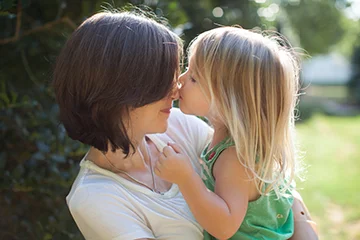
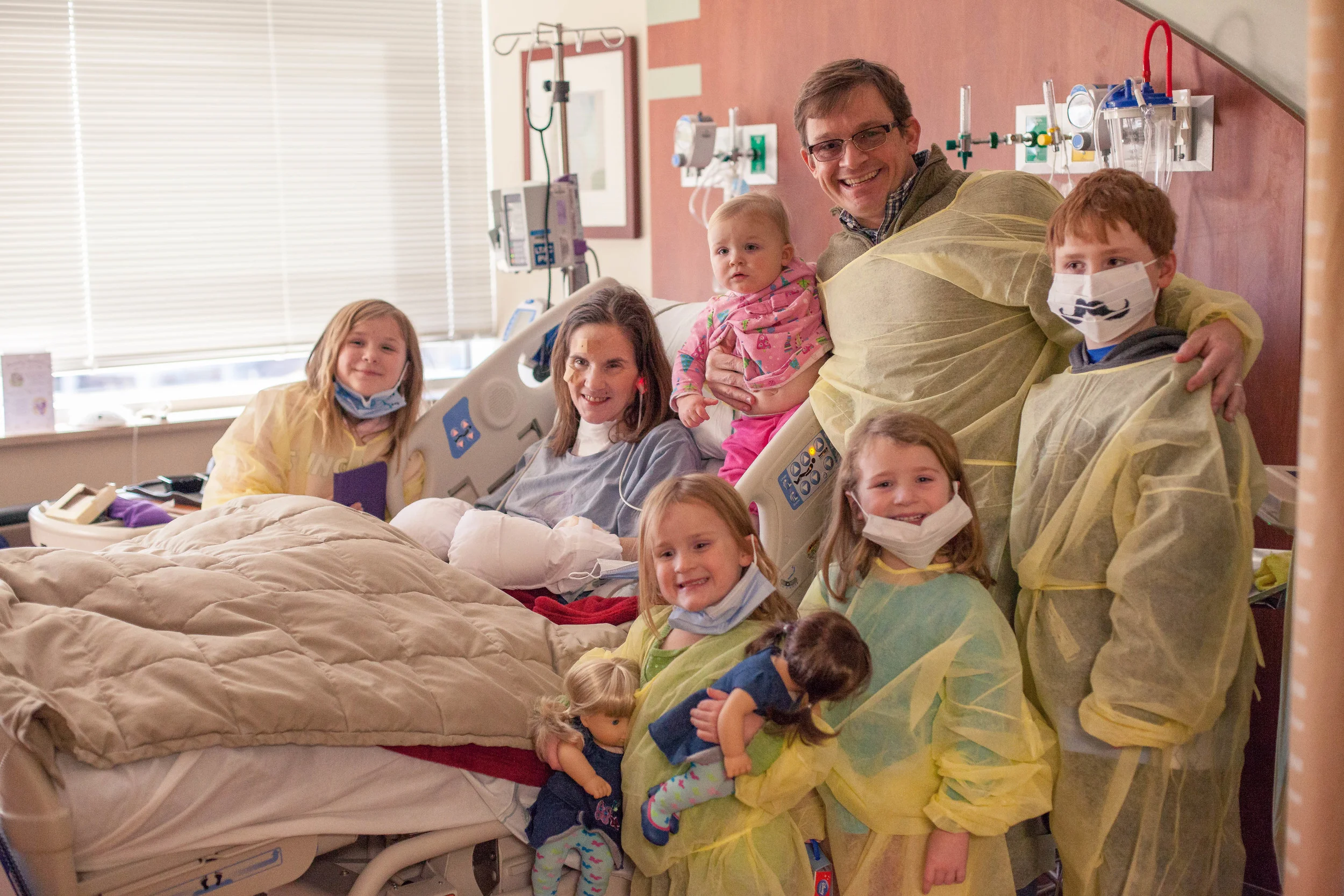
I am blessed to be the mother of FIVE beautiful, healthy, smart kids. They are incredibly resilient and have adapted well to the catastrophic changes in their lives. Each has had a unique journey, according to their developmental stage and personality. But Baby Jeannie's path has been, by far, the most troubling for me.

We call Jeannie our "bonus baby." We'd not planned on having a fifth child, so I've cherished every moment with her as the Godly gift that she is. I kept Jeannie very close to me; but, when she was 13 months old, our relationship was traumatically disrupted. I became deathly ill, and I was away from her for 100 days. Even worse, when I came home, I hardly resembled any memory that Jeannie had of me. Instead, I was wounded, decrepit, sick, and made up of more bandage than body. 

In the time I was gone, Jeannie was loved, snuggled, and cared for by the women nearest and dearest to my heart. Her aunts (biological and honorary), her grandparents, and my best girlfriends. But her caregivers were different each day, and they weren't me. Through her eyes, as soon as she'd attach to one person, it'd be time to go to another.  

After 100 days of missing her, and all of those days of using her picture on my hospital room wall as an incentive to heal and recover; I came home from the hospital, and I was yearning for her love. I couldn't WAIT to get her back in my arms. I knew, however, that it'd take time, that I would need to approach her slowly. So I remained on the sidelines; I didn't push myself on her or insist on holding her.

I was happy she had been cared for so well, but it was agonizing to see her loving every woman but me. I observed from across the room. For she would not come within yards of me. When someone would lovingly place her in my arms, she would be noticeably terrified. Her fight or flight response made her kick and scream, hit and punch me. She'd physically hurt my weakened, battered and fragile body. But that was nothing compared to what she was doing to my heart.

Day after day, night after night, I'd endure. Every day I'd start over. I'd smile at her from across the room. I'd sing what used to be our favorite songs. She'd scream, "No, stop that! No sing!" I'd stop. I kept watching from across the room, no matter how hard it could be. I would try to put myself in her shoes. I could see how she'd be angry with me. How she could think I did this on purpose. How she'd blame me. People kept trying to endear me to her. The other kids would hug me and then declare, "See Jeannie, Mommy is nice." Jeannie would only ask when she could go to La-La's (my sister's) house.  

My other kids would refer to me as "Mommy," and I watched as Jeannie tried to decipher the meaning of the word. She also watched my sister's kids refer to my sister as "Mommy." "Mommy" is a universal word. Some version of it - "ma," "mo," "Mimi," "Mame," etc. - can be found in every language across the world. Universally, it means the primary caregiver. Jeannie said, "Mommy" often, but she used it to refer to whomever was going to get her milk that day. Whoever dressed her, fed her or otherwise meet her needs was called "Mommy."  

For a long time, I was really upset when Jeannie would cry and say she wanted milk because I could not answer her plea with a full sippy cup. I would tell her to go ask Daddy. Which she did; and she always got what she needed. But you know what upset me even more? What hurt me to the core of my being? The fact that she got to the point where she would no longer ask me. She got to the point where she did not for one moment consider me. She'd go straight to her dad. Or her Aunt Lala. Or her big sister. Or her babysitter. Or the neighbor. Heck, she'd ask her "lovey" before she'd look in my direction. 

After a great deal of time, effort, and practice, I actually COULD pour milk and screw on the lid of her sippy cup, but she wouldn't ALLOW me to do it. She just assumed I couldn't and move on. In fact, she was so confident in my incompetence that she'd deny me the chance. "No, Mommy, you can't do it. Daddy do it."

The worst was when she'd fall. She would scrape her knee and automatically run away from me. I would use every ounce of energy I had to get up and go to her, and she would push me out of her way to get to her sister Caroline. Or, even worse, to her babysitter, Tricia.  "No. No touch me, Mommy," she'd scream. "I want my Tricia." I found myself feeling jealous of our babysitter  and (embarrassingly enough) of my older daughter Caroline as well. I thought Jeannie loved everyone else more than she loved me. Objectively speaking, she did.

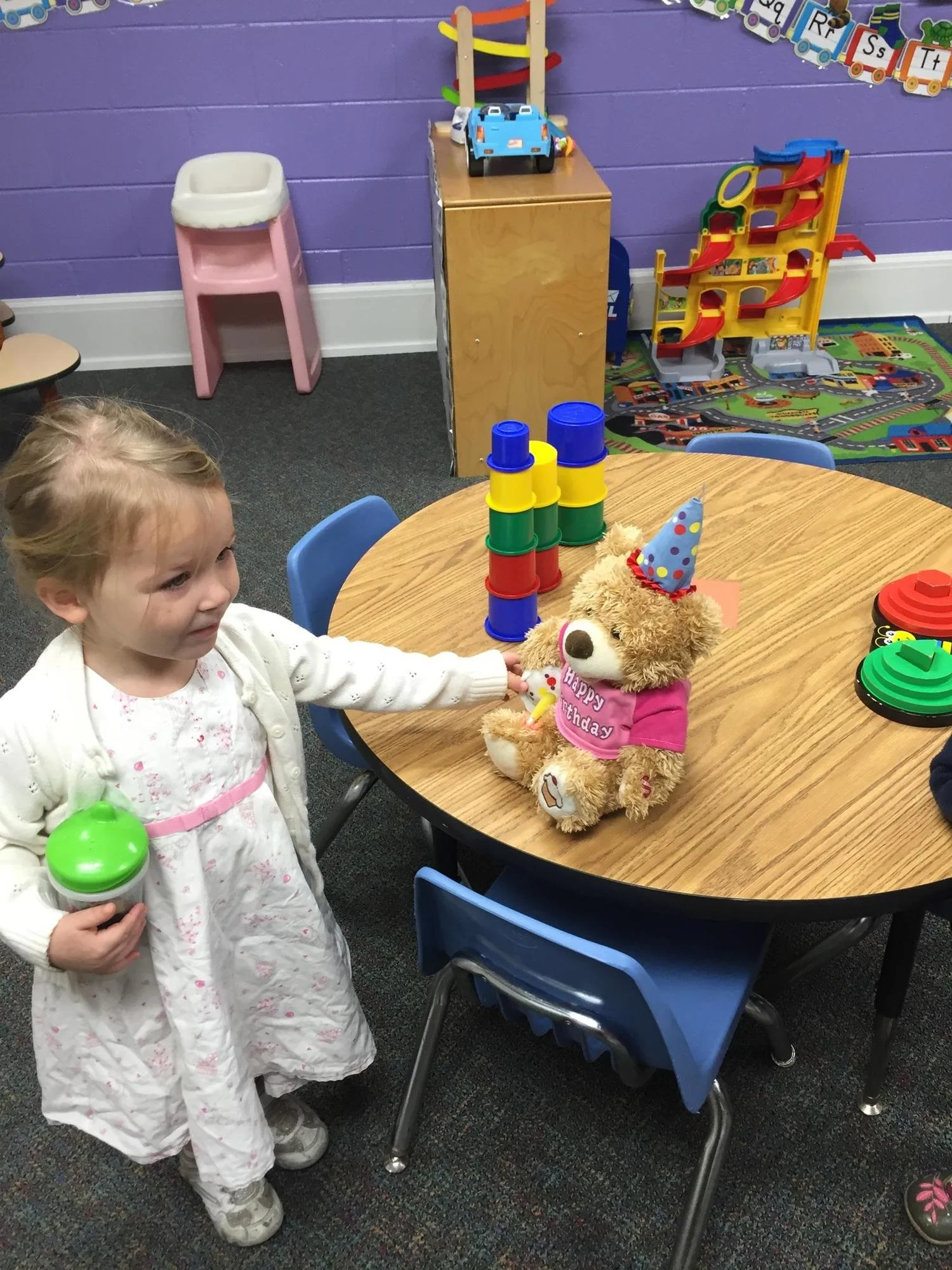
Things were tough between us. I remember when she first started preschool, I worried that she might not come to me when I arrived to pick her up. I remember skipping the class parties, for fear that she'd slap my hand away or refuse a hug in front of the other moms. Because these were things that actually happened around our house on a daily basis.

jeannie at school

Several times, I have accidentally pinched Jeannie with my amazingly strong prosthetic fingers while trying to change her diaper. "Boo, boo!" "Mommy, you hurt me!" she shrieked the very first time I tried it independently. Those few pained words were enough to keep me from trying again for months. I wanted to help her so badly! God designed a child's shrill cry well. It makes a mom naturally want to respond, to save a child from feeling anything uncomfortable like hunger or thirst or loneliness, even boredom. But every time I tried, I was reminded that I was NOT the mom I wanted to be. Still, I tried. 

The first thing I tried was sleeping on her floor. Sounds ridiculous, right? For a sick woman who is trying to recover from sepsis and amputations to purposely sleep on the floor. In graduate school, I had learned Attachment Theory, which purports that babies need to develop a healthy attachment with the primary caregiver in order to form healthy attachments with others. 

Biologically, a baby uses the smells, touches, and sounds of that primary caregiver to attach. But, how could Jeannie know my smells, sounds, and touches if she wouldn't come near me? That's when I had the idea that I could get 6-8 hours of time with her by literally sneaking onto her floor at night. I thought she might warm up to me because I would be there for her when she'd wake in the middle of the night. MOMMY would be right there to talk, touch, and comfort her all night. The first person she'd see each morning was me, her MOMMY. Slowly, she started to recognize and accept me.   

The second idea I tried was to get Brook to strap Jeannie into the stroller. She liked walks, and she didn't have to look at me, so she tolerated my being the one who pushed her. There were a lot of them.  I would sing. And talk. And point out the flowers. Slowly, she began to talk back. And request certain songs. We'd find certain colors in the flowers, and I discovered that she liked the yellow ones, so I picked those flowers and tried to buy her love with them. (Insert public apologies to my neighbors with flower beds here. This was important, guys!) Once she even initiated a walk! I knew things were turning around.

Soon, Jeannie tolerated being placed in my lap. This is when my third idea kicked in. I declared bedtime as MY time with Jeannie. No one else was allowed to put her to bed or even be in the room. At first, she kicked and screamed and cried. But I persevered. I made Brook shut her bedroom door, and I held her tightly in my lap. I sang to her until she settled down, then I read her a story, said her prayers, and sang a song... Same thing every night. Soon, she screamed less. Then, not at all. Then she actually started to request that MOMMY be the one to put her to sleep at night. And sleep on her floor. To this day, she asks that I "sweep on hur fwore," and she gets downright angry when I won't. I keep telling myself, "Remember Kristan, you prayed for this."

Over the past eighteen months, we've had ups and downs in our relationship. There were days when I thought she would never come around. One dirty look of hers could send me over the edge into depression. One day, we went to the movies, and I found myself crying because she wanted to sit on a babysitter's lap rather than mine. 

But today Jeannie loves me, her Mommy. She asks for me to read her a story at bedtime, say her prayers, and sing her songs while I rock her. (And I am a sucker for her tricks; she might just want to stay up later.) She also comes to me crying when she's gotten hurt. And runs to me with joy when I pick her up from school. She obeys my rules, though sometimes I have to threaten a timeout on the steps. 

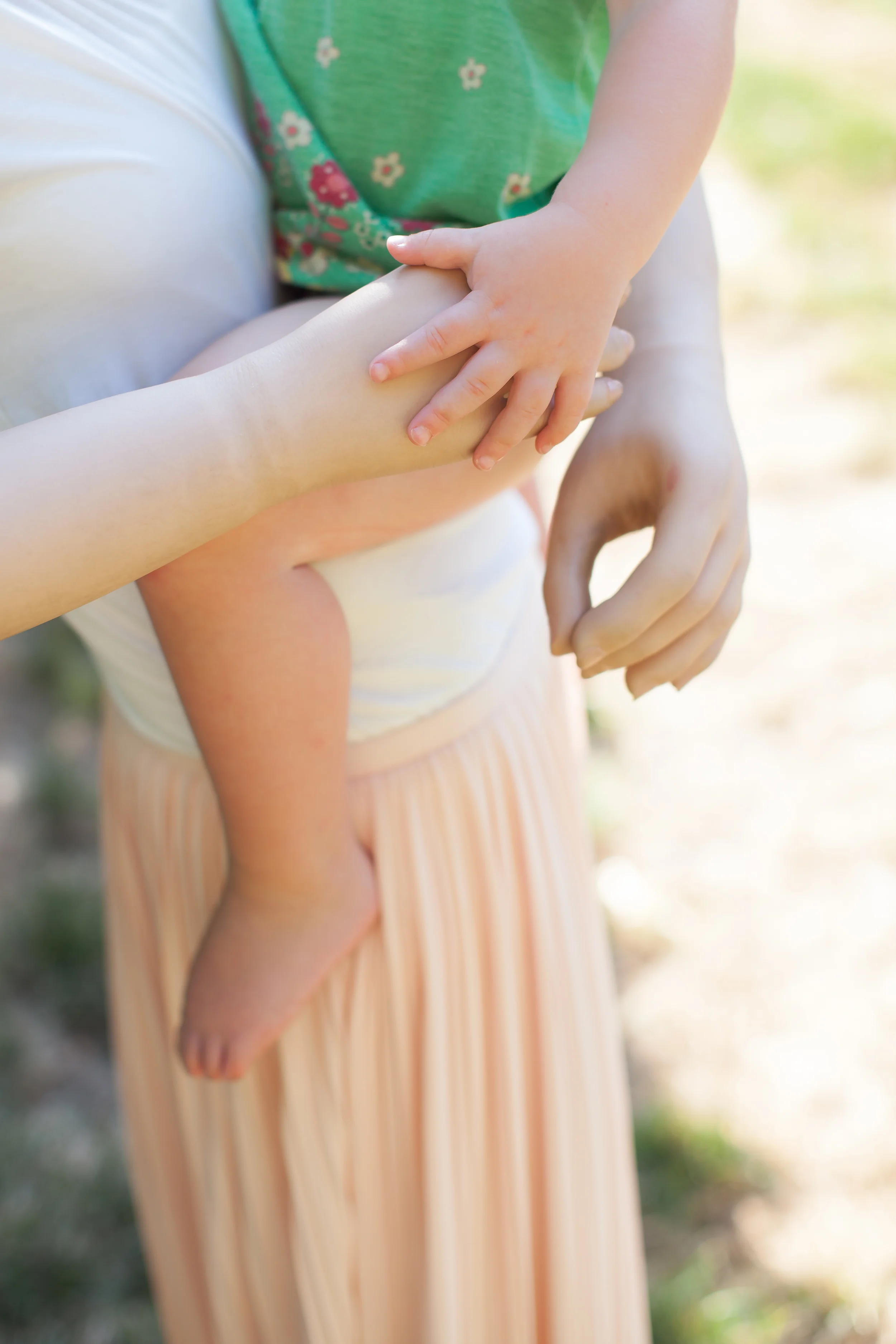
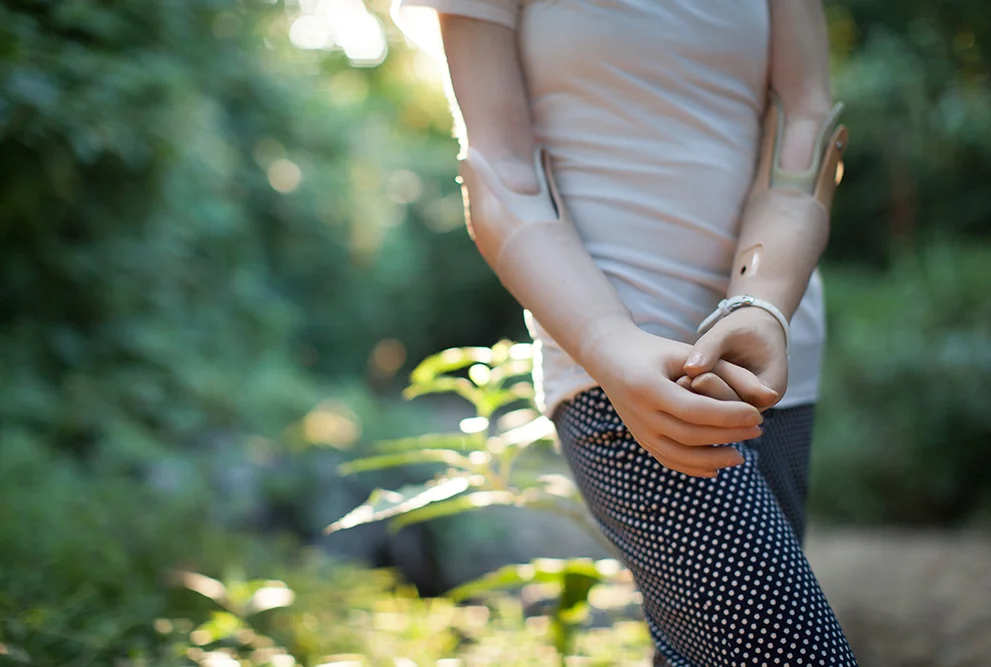
Together, we've learned to deal with the everyday challenges of having and being an amputee mom. For example, we know to take off my (prosthetic) hands when we cuddle because they are made of hard plastic that does not lend itself to warm and snuggly caresses. We know to be very still when buckling the car seat to avoid an accidental but painful pinch. When I do accidentally pinch her, we blame and punish the hand, not me. And Jeannie has learned to be very industrious and independent - she does things the older kids still can't do for themselves! 

I have set my goals high, and I've practiced and practiced. Allow me to brag for a moment: now I can change her clothes (as long as there are no buttons), I can pick her up and carry her down the stairs, make her breakfast of instant oatmeal, pack her lunch, and put a bow in her hair. 

With Jeannie's help, I can buckle and unbuckle her car seat - I fasten the bottom ones, and she does the top! I can easily turn the pages now when we read storybooks at night. Jeannie and I love to play with play-dough, and we build towers with blocks. We've named all the cows that we go to feed in the field down the street, and we know the names of all the librarians at our little local library where we attend story time and where our books are always overdue. (Sorry, Ms. Terri) These are all ordinary things that I did with of my other kids; but because they almost didn't happen, I find them extraordinary with Jeannie.

jeannie car seat

There is one thing for sure, and it can be summed up in the following song that I always sing to Jeannie:

Mommy comes back
She always comes back
She always comes back to get me. 
Mommy comes back
She always comes back
She never will forget me.

amputee mom


19 Comments

Wheel Me In

1 Comment

Wheel Me In

Today I read an article that hit me close to home. Give it a read, then come back here because I have a few things to add! 

For over a year now, I've been avoiding wheelchairs at all costs. In fact, when given the choice, I've opted for crawling around my house. With five young kids I am not allowed to say "stupid" at my house, but I have been known to boldly declare that mine is the "STUPID wheelchair."

Yes, wheelchairs are difficult to use when you don't have hands. That was my first excuse. Yes, my house (with its differing floor surfaces and obstacle course of toys and book bags) is a difficult one to traverse in a wheelchair. Excuse number two. 

But, when I'm honest, I admit that I have an aversion to the wheelchair because of what it symbolizes. To me, a wheelchair says that I am handicapped. It tells me I am dis-abled and can't walk. There is always a fear that, once I depend on a "STUPID wheelchair," I will always depend on a "STUPID wheelchair."

Being in a wheelchair makes me highly dependent on other people. Believe me when I tell you that this is a vulnerable place in which to live. In an overwhelming way, wheelchairs mean that I am less than other people, or more significantly, less than my old self, who could not only walk but run, far and fast. 

This past summer was full of surgeries that have kept me off my feet for weeks at a time. Since I've stubbornly refused to use a wheelchair, I've been limited to my bed, couch, or knees. I've crawled across that hardwood kitchen floor so many times that my knees are torn up and too sore to crawl on any longer. 

So (and this is a rare occurrence), I've given in. The "STUPID wheelchair" won, and I've taken the ride.This short stint in a wheelchair has actually taught me a lot about what people in wheelchairs have to deal with every day. It has helped me appreciate many of the small advantages I have as an amputee who walks, as well as some big ones.

A few weeks ago, my daughter completed some academic testing with an educational psychologist. The next step was a follow-up appointment that included the parents and was scheduled for the week after my most recent surgery. But, because I am in a wheelchair, my husband Brook and I had to cancel. You see, the psychologist's office is on the second floor of a beautiful, old, brick office building. With no elevator. 

We were hugely disappointed. When I called to cancel, the doctor was very understanding and quick to accommodate us. She called a colleague and arranged to use her nearby office that is handicap-accessible the following week.

That relatively-speaking very small inconvenience raised a lot of questions for me though:

  • What if this appointment had been more dire or time-sensitive?
  • What if my wheelchair was permanent?
  • Would I then be forced to search for doctors in handicap-accessible buildings? Would my comings and goings ALL be limited by elevator access?
  • Would I have to choose restaurants, and shops, and hairstylists, and everything based on accessibility? 
  • Should I be fearful of going in to tall buildings - what if there were a fire? 
  • Could I get down the stairs? Is there someone with me who could (or would) carry me down?

I don't write this with political aspirations or as a complaint. Rather, I want to raise attention to this issue because I never would have thought about it either! 

Before my limb loss, I never would have thought about limiting my water intake so that I wouldn't have to use the bathroom during an outing. I would never have considered that my friends and family would need the direction and ability to assemble and dissemble my wheelchair if we were going anywhere. Not once had I chosen a restaurant for its wide aisles between the tables. (But I also wouldn't have expected my daughter to have this much fun riding in my lap or pushing so many elevator buttons.)

Let's stop to consider all the things that come easily to those of us that don't normally need a wheelchair. Or any other accommodations for that matter, be they physical or psychological.

-------

Yesterday I had the pleasure of attending a meeting at Classica Homes, the local home builder that remodeled my downstairs bathroom to make it handicap-accessible. An important and loyal client, this company is also family to my dad. When they heard of my illness, they jumped to our aid and offered to accommodate my house at no charge. Amazing, right?

So yesterday I was a guest at their company-wide quarterly meeting - to officially meet the people who helped me in such a grand way, to tell the story of my recovery, and to publicly thank them for all they have done. I had envisioned myself striding into that meeting and standing up professionally to speak. I just wanted to make my dad proud. Unfortunately, I had to be wheeled in; and I had to remain seated the whole time. Let me tell you, it was a new and challenging experience to meet someone in a respectful, professional manner without standing! 

In our culture, meeting someone new involves standing up and shaking hands. It creates an awkward space when I am unable to do either one.  

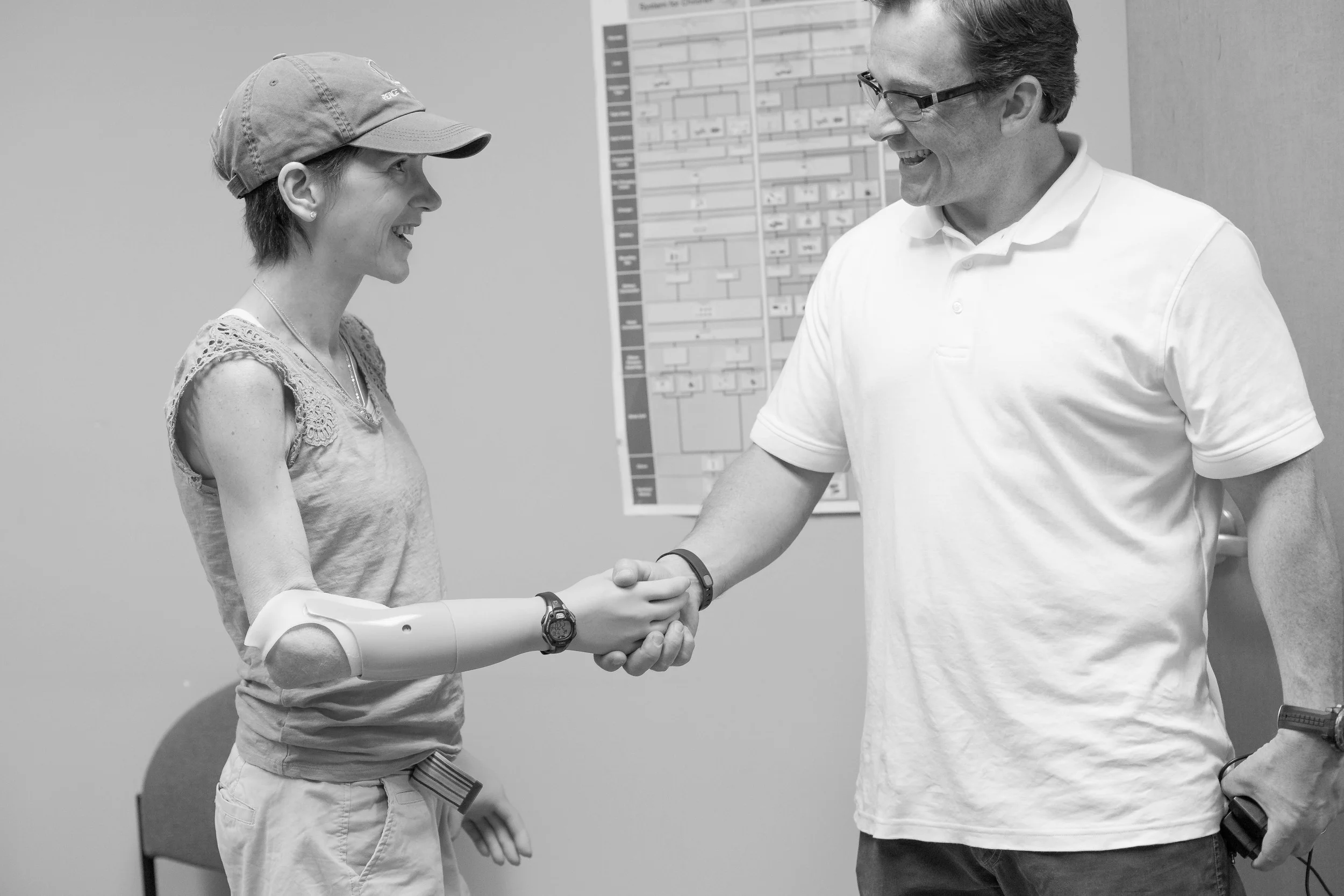
Several months ago, I had given some thought to the hand-shaking challenge - Should I risk breaking someone's fingers with my powerful, robotic, prosthetic grasp? Probably not. Should I just nod my head? Should I hug instead? I finally settled on holding my hand out and allowing the new friend the opportunity to grasp my prosthetic fingers. Seems to work ok for now...

But now there is this (new) challenge of staying seated to greet someone new. And I can't think of a solution to that one. But I will say this: once I am back on my (prosthetic) feet, I am surely going to bend or squat down to eye-level to meet or greet anyone in a wheelchair. 

Listen to how my brilliant and tactful father made my situation smooth and comfortable. His job at the meeting was to introduce me before I spoke in front of the larger group. Instead of moving to the front of the room and standing to address the group, he remained seated for his introduction. (Luckily, the room was set up as a round table discussion, so this worked.) 

Just that small, subtle tactic did an incredible thing: it normalized that I'd be sitting during my talk! How beautiful! I didn't feel one bit awkward after that, and my talk went incredibly smoothly. Thank you, Dad.

I only hope we can all normalize disabilities and help people of all sorts feel comfortable and confident. Because we all have disabilities, some visible and some in-visible. Let's celebrate our strengths and our weaknesses - they are what make us human after all.

1 Comment

First Communion

6 Comments

First Communion

The first time I went back to church after my hospitalizations was for my daughter Caroline's First Communion. It had been a big goal of mine to get there. 

I remembered so well that the previous year, my dear friend Ashlyn, who was sick with ovarian cancer, had wanted more than anything to attend her daughter Kaitlyn's First Communion service in our brand new sanctuary. Sadly, Ashlyn was too sick to attend and was in home hospice care for Kaitlyn's big day. Fortunately, a few weeks earlier, our pastors had visited their home to perform the sacrament for them when she was still fully able to enjoy it. But I still wished, for her, that she'd been able to attend like any other mom.

In honor of Ashlyn, I wanted to be at church for Caroline's First Communion day. And I wanted to walk into that sanctuary. No wheelchair. No walker. Just me. I wanted the day to be about Caroline receiving the body of Christ, not about getting her disabled mother into her pew.

With God's help, I was able to walk in to that service. To honor this milestone, it was also important to me that I didn't look weak and sickly. For anyone who knows me, I have never been a "matchy-match" girl who dresses herself or her children in designer clothing. But I wanted to have on a nice outfit and have my hair/make-up done well. I wanted to look like I had my act together as a mother; that all my daughters match in pretty white dresses, maybe even with bows in their hair. 

Looking back, I think that "looking the part" symbolized for me that my family was going to be OK. I wanted my church community to know it. Or maybe I just wanted to be convinced of it myself. We walked in to church that night looking pretty, but I was still working on the "believing we are going to be OK" part.

That night, and every service thereafter, presented another challenge for me. One that "able-bodied" people might never consider. For the few of us on this planet that don't have hands, the challenge lies in physically receiving communion. I never conceived that this would be a problem until our congregation started lining up and walking towards the altar. But, as our pew started to stand and go, my eyes met my husband's, and we knew I could not receive the Body of Christ without help.

My dear husband took the communion wafer for me, dipped it in the wine, and placed it in my mouth. He had been feeding me for months, so this was second nature to us. We made the best of it, and I appreciated the symbolism in the fact that he got to be my Eucharistic Minister. But what would I do the next time, or the time after that?

As time went by, and as I endlessly practiced using my prosthetics, I got better at eating my meals. In addition, the pastors and lay ministers at my church learned to work with me at communion time. It became easier and less nerve-wracking to receive Communion. There have been several occasions where I dropped the host (Talk about an "oops!"), but eventually it became easier.

However, we don't always attend our home church. On our annual vacation in the mountains, for example, we always visit a small, beautifully welcoming church in Brevard, North Carolina. This summer, like all the others, we attended service on our way home from vacation. It did not dawn on me until we walked up as a family and knelt at the altar that their way of giving and receiving communion would be a little different.

The expectation was for me to open my hands and shape them into a cup, receive the wafer, and hold it there until the communion assistant came with the cup of wine, where I would then dip the bread. A little tough when you don't have hands, right?

The pastor placed the body of Christ into my prosthetic hand, and then I froze. As did she. We were both at a loss as to how I was going to dip and eat...

After a seemingly long, but in reality short, pause, my two-year-old daughter Jeannie instinctively and clearly said, "I help you, Mommy." She quickly yet delicately picked up the body of Christ and placed it in my mouth. I sighed with relief. And joy. The Holy Spirit moved her! I knew in this moment that God was giving me His Son. Giving me His mercy and grace. He, through my daughter, was assuring me that, together, my family was going to be OK. 

Jeannie then insisted that she "wanted some too!" The church we were visiting has open communion. This means that anyone of any age can receive. So Jeannie technically could receive. Brook did not necessarily want her to take Communion until she had received instruction on the topic, so he shook his head. Jeannie, however, disagreed. She started to throw a mighty fit, the way that only a two-year-old can. She would get The Body of Christ, she would! How do you say no to that? Obviously, we gave in. 

Praise God! Jeannie received her First Communion! Ironically, she was wearing a white eyelet dress. 

So, just so everyone else knows (and I believe it myself with all my heart): 

My family is going to be OK.

6 Comments

Update

48 Comments

Update

Last week, I got a call from my orthopedic surgeon. The one that is so cute and sweet and funny, that I would totally have a crush on, had he not cut off my leg, my toes, and part of my heel. Sorry Doc, but that was a deal breaker. 

The purpose of his call was to update me on the results of my most recent MRI. I was experiencing significant pain and swelling in my residual leg and we were trying to figure out what was causing it. 

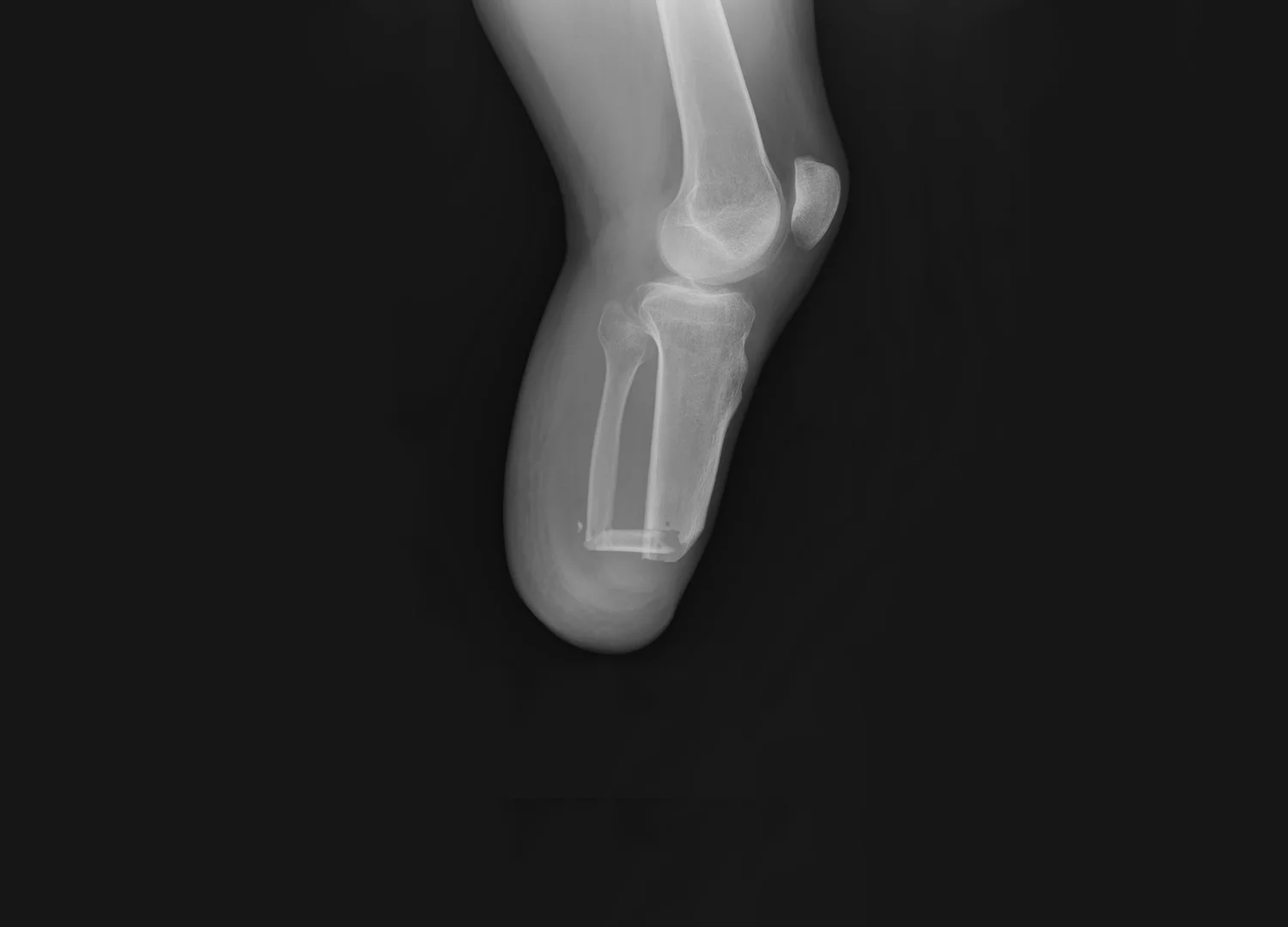
A little background here: in order to create a more sturdy and balanced area to stand on, doctors often use a screw to connect the tibia and fibula bones. With time, the bone naturally grows around the screw and creates one big tree trunk rather than two little twigs to stand on. Pretty amazing, right? The procedure is called an Ertl (named after the surgeon who developed it). 

Sometimes the screw no longer becomes necessary, which was my case. However, it got jarred loose and then started stabbing around in my leg when I walked, creating (obviously) significant pain. About a month ago, he removed the screw, hoping that's all we needed to do to relieve the pain. When it didn't, he ordered the MRI.

In the call, the surgeon finally explained what the recent MRI revealed: the screw had essentially torn up the nearby muscle and likely torn it off the bone.

"Ouch!" he said when he saw all the swelling on my MRI. 

That's what I've been saying!

Now for the solution:

Later today, my surgeon is going to "revise my BKA," which to us laypeople means to open up my Below Knee Amputation again, sew up my muscle, and repair any damaged nerves and bone. He really won't know what he's going to do until he gets in there.

I keep telling myself that, after all I've endured; this is not a big deal. And it's not; but; at the very least, I'll have to stay off of that foot while everything heals - for at least three weeks anyway. Then, since my leg will change shape, we will have to start over with prosthetic fitting and building. Ugh.

This is a setback, to be sure. But one that we (meaning all you guys and me) will tackle just like all the other ones: with a smile (even if those teeth are gritted) determination, and optimism. This time, you are gonna have to help me with that last one... Prayers accepted (and encouraged). 😀 Thanks everyone, Kristan. 

48 Comments

Back to School

5 Comments

Back to School

Today I got to have lunch with three of my girls at their elementary school! It was the first time I've done that this year, and we were all very excited. I feel so lucky to be able to do that. For two reasons:

A) I am grateful that I am physically able to do it - to drive to their school and walk down the steps to their cafeteria. There was a time I thought I'd never be able to do that again.

B) I am grateful that I get to stay at home with my children right now, so I am free to visit with them during work hours.

A week or so ago, I picked up the latest edition of inMotion Magazine "The Living Well with Limb Loss Magazine." Stop laughing. I know it's not Cosmo. But this is what I read now. ðŸ˜œ (btw- I would have chosen a better emoji, but they don't make laughing triple amputees.)

Back to my point. The cover photo on the magazine was of an amputee mommy and her elementary school-aged child. Right up my alley, right? The feature article had tips for amputee parents as their kids head back to school. The Amputee Mommy has one leg amputated below the knee; she recommended wearing pants for the first couple of visits to school so that your child is not labeled the "girl with the disabled mom," and your child's classmates will get to know you a bit before they are shocked by your prostheses.  

So, despite the heat and humidity of North Carolina in September, there I was, walking in to school wearing jeans and a long-sleeved shirt. But it was worth every drop of sweat rolling down my face.  

Now, to be fair, many of the students know me from last year, BUT this was my best school visit yet!  Not one kid asked me what happened to my leg. Or why my hands looked so strange. I did not notice one kid staring at me. I felt almost like a normal mom. SUCCESS! It is funny that, before my amputations, I used to worry about (not) fitting in with the PTO moms at school. I always felt like I was different. Haha. I knew nothing about being different then.

Later today, my husband Brook asked Caroline (our 9-year-old) about my visit. She agreed that no one really noticed or asked about my hands or feet. Brook kept trying to open doors for her to vent about having a disabled mom. But Caroline interrupted him by saying with confidence, "You know what, Dad? I honestly don't care about that. Everyone just sees her as my mom, and everyone knows she's no different."

Well said, Caroline. Well said.

5 Comments

World Sepsis Day

14 Comments

World Sepsis Day

Today is World Sepsis Day. To honor this day, I am defining and describing sepsis, in hopes of educating and increasing awareness.

Sepsis is the disease that almost killed me. It sent me into a coma and stopped my lungs, kidneys, liver, and brain from functioning. Sepsis also stole my hands and feet. It robbed me of my ability to do my job, run my house, and mother my children. Sepsis changed my life. Forever.  

Colloquially known as “blood poisoning," sepsis is a life-threatening medical condition that can develop from any number of infections; the infection gets into the blood and damages important tissues and organs. In severe cases like mine, blood pressure drops, multiple organ failures ensue, and the patient can die from septic shock within hours of the first symptoms developing.

Sepsis is a global healthcare problem that killed more than 258,000 Americans last year. It is more common than heart attacks, and it claims more lives than any cancer; yet, even in the most developed countries, fewer than half of the adult population have heard of it. Symptoms of sepsis can be described as the following: 

sepsis symptoms

I have read of people who have had sepsis develop from urinary tract infections, an infection following a simple surgery or medical procedure, and even the simplest cold virus!

This is not meant to scare, but rather to raise awareness that the above symptoms can be very dangerous. If caught early, there are obviously much better chances of survival. Sepsis can attack anyone: you or me, or your neighbor, just as easily as it could the individual in a poverty-stricken country. It attacks healthy children as well as sickly, older adults. 

While sepsis is tragic for most, it is also what gave me the opportunity to fight for my life, for my husband, and for my children. Because of sepsis I truly appreciate my life, my husband, and my kids as well. Sepsis has helped me develop a stronger identity based on who I am, not what I do. Its aftermath is helping me teach my children values like determination and resilience; the importance of family, friendship, and community; and discrimination based on ability, to name a few.

Still, Sepsis is not something I'd choose, nor is it something I'd wish on my worst enemy. In its mildest form, it requires hospitalization and a lengthy recovery. When it strikes hard and fast, an individual leaves this world much sooner than he/she had planned. The way we can stop sepsis is to know and recognize the symptoms and to act on them quickly. If you suspect sepsis, go or call the nearest emergency room, and say, "I am concerned about sepsis." This alerts healthcare workers and tells them to act fast. Another important thing to remember is that the best way to prevent sepsis is to prevent infection. Wash hands, wash surfaces, and keep vaccinations current.

Whatever your circumstances, please help me celebrate World Sepsis Day on September 13, 2015.

To read more, visit the following:

www.sepsis.org

world-sepsis-day.org

14 Comments

The Beauty of a Shower

8 Comments

The Beauty of a Shower

This is a blog post that I wrote a few months ago. I was just recovering from a surgery on my right foot, which attempted to close up a wound created by my original amputation surgery 18 months ago.

Relatively speaking, the surgery was not a big deal. What was a big deal was the aftermath. My whole leg was in a cast, and I was labeled "zero weight-bearing," which means I couldn't put any weight on my right foot. This put me in a pickle because my right foot is my only foot. I was stuck in my bed; if I wanted to get up, I had to crawl. Or  hop on my left (prosthetic) leg with the help of a walker. I also couldn't get that right foot wet, so showers were not in the cards for me.  

Which led me to this post:

The Beauty of a Shower

Everyone (except my 12-year-old son) loves a shower. But today I had the most beautiful shower imaginable. It has been 6 weeks since my last one. 6 weeks since I have felt truly clean. 6 weeks since the hot, cleansing streams powered over my hair, down my arms and back and rolled down to my legs and feet. Sponge baths just. Don't. Do it.  

But today (about six weeks since my most recent foot surgery), the surgeon sawed off my cast and announced that I could finally get my foot wet! It is hard to run in a walking boot. But, like a kid "walks" on the pool deck when the lifeguard is watching, I raced-walked home to my brand new, beautiful shower. The one that my dad designed and his friends at Classica Homes donated and built for me.  It has a handicapped shower chair, but the rest of the space seems made for a movie star. Gorgeous earth-toned tiling surrounds this giant walk-in shower that could fit my whole family of 7. And since that family has not had time to vandalize it yet, it is wonderfully sparkling clean!

But the looks of the shower don't even come close to the FEEL of the shower. There are (count them) SIX powerful shower heads that shoot water at you from every direction. So many, in fact, that we can't use all of them all of the time because our water bill would amount to more than our mortgage payment! 

So my dear husband helped me get into this wondrous spa, turned on the shower head and all the jets (making up for all the water I saved by NOT showering for 6 weeks), and left me alone with my favorite, delicious-smelling, luxurious  guilty pleasure - Aveda Shampoo (thank you Megie for the perfect birthday gift).

We take our showers for granted. Most of us shower at least once a day. We stumble in with eyes barely open to have the streams wake us up. We jump in after a tough workout. Or we cleanse the dirt of the day away right before bed. Some of us do all three.

Being denied a shower because the hot water heater is broken or because the campsite has no running water is one thing. I have many times now had hospital filth on my skin that I wanted washed away, or my sweet husband has not had time between washing all of our kids to help me shower at home. So showers have recently taken on new meaning for me. But sometimes I do think of our homeless brothers and sisters who are truly denied the beauty of a shower. I am convicted by the truth- we are privileged and downright spoiled in the ease with which we shower.

All this thinking brings me back to a day in January 2014. At the time, I was staying at a rehab hospital/nursing home, awaiting the surgery that would save my life but change it too. My hands and feet were necrotic and gangrene, black and dead. My fingers were twisted, wrinkled, and shriveled like those of the wicked witch of the west. I had not showered since November 22nd, and, believe me, my body had been through a lot.

The ICU nurses had taken great care of me; they had gently bathed me during my coma and thereafter with warm, soapy water and a washcloth. While I was not trying to impress the male nurses and doctors with my hair and make-up, I never feel truly clean without a bath or shower. I have to admit, I was longing for the squeaky-clean feel of a 20-minute-long, scalding-hot, hard-hitting water-pressured, indulgent shower. The kind that leaves your skin red and inflamed.

On this particular morning, my occupational therapist came into my room for my daily session. She announced, "It's my birthday!" "Oh, Happy Birthday, Leena," I replied. She went on to tell me that, as HER birthday gift, she was going to give ME a shower. Now, this was not her job (and yes, many of the nurses and their assistants repeated that this or that was NOT in their job descriptions when I asked for things).

Leena did not have to help me shower; she could have just worked with me on holding a cup or sitting in a chair safely. She could have stayed out of it and let the nursing assistants worry about my required every other day sponge bath that did not include washing my hair.

Let me describe for you what a shower required at this point. Every limb had to be bandaged, wrapped in twenty layers of gauze (we called these my mitts), then covered in plastic garbage bags and closed with a ton of masking tape to keep the mitts completely dry. If any of my wounds (aka my hands and feet) got wet, they could get infected, which is what got me here in the first place. An infection could mean death. Or it could mean my amputations would need to be higher on my arms and legs. In other words, putting me under running water was not only a pain in the neck, it carried risk. Yet, Leena's overly kind heart led her to mark her birthday with helping me.

"Really?" I gasped. Leena nodded in reply, a huge smile on her face. I was anxiously excited, a bit scared of slipping and falling. But I wanted to do it nevertheless. I trusted Leena implicitly. But, for a fiercely independent, control freak like myself, allowing someone to carry my naked, fragile body and soul was a scary step into vulnerability and helplessness. The first of many. 

Once she stripped off my gown and safely wrapped all four nightmarish appendages, Leena lifted me out of my wheelchair (I was roughly 80 pounds at the time, so that part was easy) and placed me onto the shower chair. I was so weak from the trauma of the last two months that sitting up in a chair was difficult and tiring. Nursing homes are not known for their water pressure, but a sprinkle could easily knock me over now. So Leena slowly let the water flow down. I closed my eyes, held my breath, and thanked God for the blessing I was about to receive.

Then it hit me. More like patted me. Oh, the glory of water. Now I know why it is sacramental. Purifying. Baptismal. It warmly soaked my hair, rolled down my shoulders and back. I shivered in delight; then I blew out the deep breath I'd been holding. I opened my eyes and looked up at my Leena with a grin the size of Texas. I whispered, "Thank you, Leena." Then louder, "and Happy Birthday."


8 Comments

A New Friend

4 Comments

A New Friend

I made a new friend today. And not just on Facebook, though that's how it came to be. Ian is his name, and he's an amputee. He found me through a common Facebook group, and I am so glad he did because his story gave me JUST the encouragement I needed today. That ever happened to you? You run into an old friend who puts your own troubles into perspective? Or motivates you to get back to the gym or to church?

The funny part was the messages that went back and forth between the two of us. 

"So, not to be crass, but, do you have hands?"

"Nope. You?"

"Well, sort of. They are pretty messed up."

(This was definitely not a conversation you'd see on Ashley Madison.)

"Hey, I hear you have a foot? How's that working out for you?"

"Ha ha." (Wait, maybe he's serious) 

"They talked about saving my foot but decided against it." (Oh, yup, he was just curious)

The conversation went on. And it was great to talk to someone who understood. He is a few years ahead of me in his recovery from sepsis. He wins in the hands department. But I have more feet. And I have more kids. I win! 

I talk to people in the amputee community that live all over the country, one even in Panama. And I hang out with amputees around Charlotte too. They have quickly become my family. And I don't know what I'd do without them. They teach me, encourage me, support me. They amaze me. I know these bonds will only grow stronger as I delve deeper into my amputee life. 

"It was great talking to you."

"Yeah, Thanks for friending me! I'll look into that new leg you were telling me about. We'll talk soon. Gotta run! (Not literally, of course 😜)"

4 Comments

10 Comments

Welcome To My Blog!

Kristan Seaford

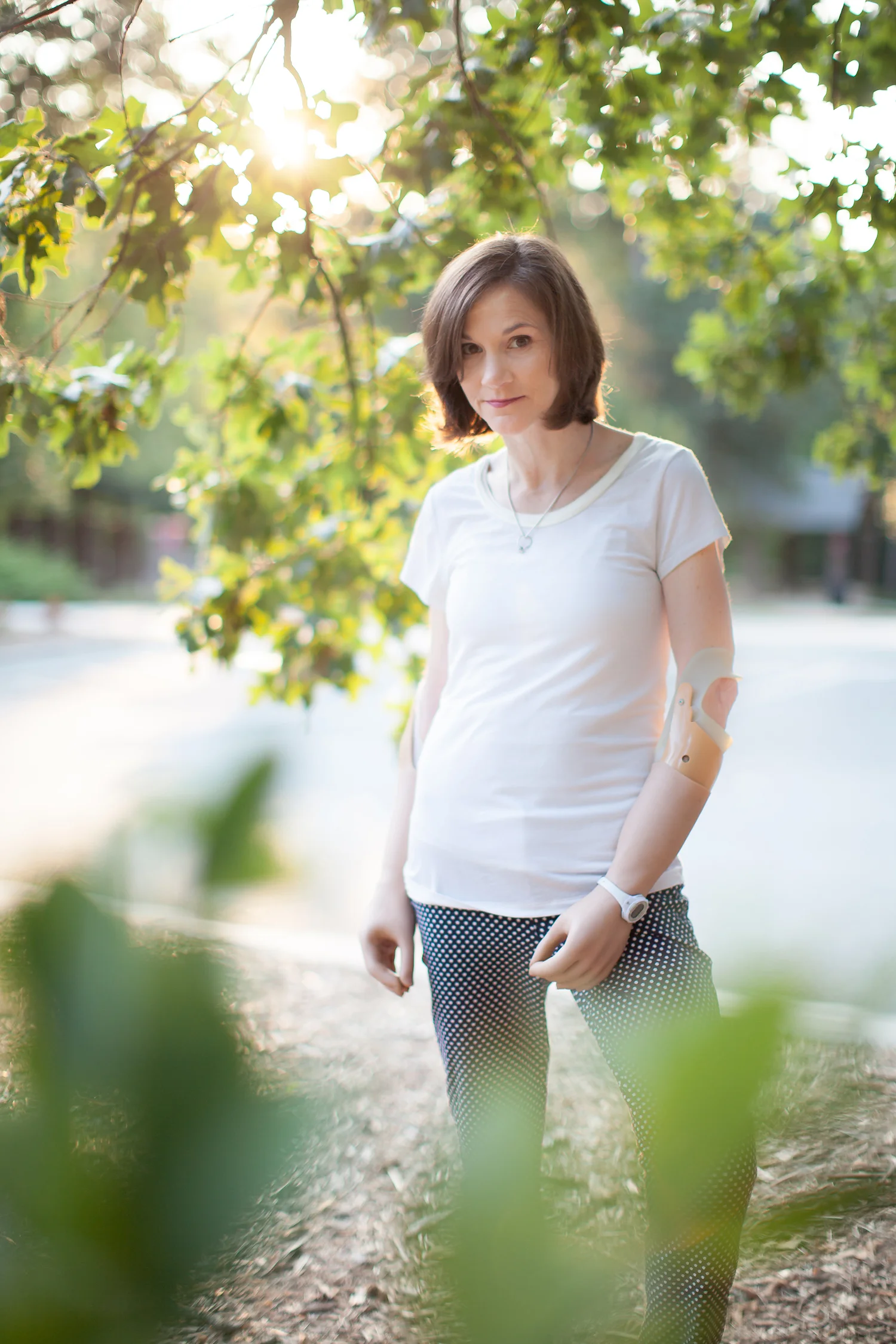
Welcome to my blog! My name is Kristan Seaford, and I am a motivational and faith-building speaker, writer, and blogger. I have an interesting, fulfilling, fun, but physically difficult life. I live in Charlotte, NC and have lived here for most of my life. 

I am still recovering from a pretty catastrophic illness, which began in November of 2013. What started out as the flu and strep throat turned into a life-threatening condition called septic shock. An infection in my blood caused my organs to fail, one after another.

After 100 days, a medically-induced coma, six hospitals, and a miracle, I survived. However, the powerful medications and treatments that saved my organs took the blood, oxygen, and nutrients from my limbs. My hands and feet essentially died.

Today I live as a triple amputee, with my remaining foot missing the toes and part of my heel. I am learning to use amazing prosthetics, which are helping me live a fairly "normal" life.  I am able to parent my five children - driving them to their various activities, signing their reading logs, volunteering at their schools, and potty-training the little one. I have even been able to return to teaching group exercise classes at the local YMCA.  

On this blog, I am seeking to chronicle my daily life, educate people about amputations and prosthetics, make people think, and laugh and cry, help people appreciate their gifts, prove to people that those with disabilities can do anything that abled people can, and motivate people of all abilities to reach for their dreams. Here goes!

10 Comments