Viewing entries tagged
counselor and matthews

Mental Health: Marriage Counseling

Comment

Mental Health: Marriage Counseling

So far in this series on mental health, I've been talking about individual counseling. Now I wanted to touch on marriage counseling. Being in relationship with others is a large part of what makes us happy and content; but it can also be a source of strife, loneliness, and downright misery. The good news is that even the most troubled relationships have room for growth, healing, and hope. As a trained marriage counselor, it is my job to lead couples there...

Marriage Counseling

I absolutely adore being a couples counselor (btw, we therapists use the terms "couples" and "marriage" interchangibly.)!  Specifically, I love the moment when I notice the tension lifting in the room, the couple's hearts softening, and gentler, more positive tones returning in their voices.  There's this one moment where I can read their thoughts--and they're thinking, "Ohhh yeah, that's why I love him/her/them!"

How do I know if we need couples counseling?

If you are wondering and asking the above question, the answer is probably yes. Many of you wonder whether counseling can help; I'd say that it's worth a shot. I've seen many couples who were on the brink of divorce that have landed in my office, healed the hurts in their marriage, and then gone on to build a relationship that was far stronger and far better than they could have imagined. I've also helped couples work through one specific issue, only to find that they love marriage counseling so much that they want to continue coming to enrich their already strong marriage

Does insurance cover marriage counseling?

Actually, most insurance policies do NOT cover marriage counseling. Insurance companies only want to cover procedures that are medically necessary. In order to be medically necessary, a procedure (like any office visit) must treat a diagnosis. And "relationship issues" does not count as a diagnosis. There are exceptions to this rule, but they are just that: exceptions. If you believe you are one of those, I'd be happy to discuss.

How much does all this cost?

Here in Charlotte (Matthews), the going rate for a counseling session is $150-$400 for the intake session and $120-$300 for subsequent sessions. Those are "cash pay" rates; if you have insurance that covers mental health care, it may be significantly less. Either way, seeing a mental health counselor is an investment in yourself, your child, your marriage, your family. It will help you or your family manage your mental health needs in the present and the future, and that is well worth the effort and the cost. Marriage counseling is far less expensive than hiring a divorce attorney and supporting two households rather than one!

The Gottman Method. What is that all about?

The Gottman Method is globally recognized as the premier relationship therapy. There are now 38 million relationships that are empowered by the Gottman Method. It is based on 50 years of sound, longitudinal research; so all the tools, techniques, and tips are proven and science-backed. The Gottman Method also happens to be the approach that I use in couples counseling. Stay tuned for my next blog post, which will further explain the why and the how of my work with The Gottman Method. Until then…

Comment

Mental Health: When's it Time to Get Help

1 Comment

Mental Health: When's it Time to Get Help

May was Mental Health Awareness Month, and I had every intention of doing a series of blog posts to boost awareness of mental health and the problems that prevent it. In an ideal world, I would have published three or four posts in May. But just because the month is over, it doesn't mean that awareness is not important or that we don't need to be educated about the things that contribute to mental illness as well as the things we can do (not if, but) when they crop up. Please join me in reading and spreading the answers to some of the questions we'll ask when we or our loved ones need mental health help.

How do I know if I need to go see someone?

If your symptoms are affecting your ability to function in daily life, your physical health, and/or your relationships; you could probably benefit from talking to a therapist. I always say that there's a real problem whenever someone's appetite and/or sleep is affected— when a person is eating or sleeping too much or not at all. Many people don't realize they need help until a loved ones points it out. If you're wondering, ask a loved one if they've noticed that anything is a little “off.”

Perhaps you've had uncontrollable crying spells, a lack of motivation, difficulty getting out of bed, or a general sense of doom. Or maybe you have a nervous energy about you, can't calm down, or have had a series of panic attacks. If any of the above symptoms have lasted longer than two weeks, it's time to take action. Ask a friend for a recommendation, call your insurance company for a list of contracted providers, or make an appointment with your family doctor.

**Always seek professional help if you're having thoughts of harming yourself or someone else!!! In an emergency, you can call the National Suicide Hotline at 988 or even 911. (988 will connect you with a mental health professional rather than simply a dispatch worker who may or may not have specific training in mental health.)

How do I know if my child/teenager needs to see someone?

If you notice any sudden changes in your child's grades, habits, attitudes or beliefs, it might be time for them to see a professional. If you notice big personality changes, if your child is withdrawing to their bedroom more than usual, of if there are changes in their eating or sleeping habits for longer than two weeks, seek help! In some cases, a child/teen/tween will ask to see a counselor; this a good sign that he/she is in need of help. You might want to get the ball rolling by taking them to their pediatrician. That's what pediatricians are there for. I would always err on the side of caution; when in doubt, reach out!

How do I go about finding that certain someone?

A simple Google search of "counselor near me" will bring up a preliminary list, as will a visit to "psychologytoday.com". Once you have a list of providers, look to see which ones specialize in the issues where you or your child struggles as well as which ones are contracted with your insurance.  Then you may start contacting them to see which ones have availability and openings that match your schedule. Lastly, you might schedule a quick phone consultation to determine whether you have an easy rapport. If so, you have a therapist!!! That said, never settle for a therapist that is not a good "fit." The success of therapy is wholely dependent on the quality of the counseling relationship, so don't waste time working with the wrong one. Don't give up though-- the right counselor for you is out there!

How long until I feel better?

Unfortunately, there is no guarantee on therapy; and there is definitely no distinct timeline for when you'll feel better. But therapy is one of those things where you'll get from it what you put into it.

How long should I be in therapy?

Again, there's no guarantee on how long it may take until you'll feel significantly better. In fact, you may feel worse before you feel better. I often use the analogy of healing a wound that's become infected. Sometimes, we have to rip off the bandaid and clean out the wound before we feel any better. And this process often hurts. However, in my work, I've found that all the pain and all the hard work is well worth the effort. It is only through this effort that we heal.

How will I know if I need medication?

This a personal choice. Talk to your counselor if you would like to ask more specific questions. Although counselors can not prescribe medication (see the previous post), they will be well-versed in what each drug targets and what their side effects are. I think you'll find that this is a good space to talk about your options. This is a personal thing, but if/when my own kids all about whether they need medication; I insist on their talking first to a counselor, and to keep talking to this counselor during the first week(s) of medication use and through the question of its effectiveness. I see the use of medication as an adjunct to counseling, not to be done as a stand-alone therapeutic intervention.

I do hope this is a helpful framework for getting and receiving help, but don't let this be your last step. Feel free to contact me with any questions or concerns. Or you may just ask your question in the comment section below…

1 Comment

Mental Health: Your Questions Answered

4 Comments

Mental Health: Your Questions Answered

May is Mental Health Awareness month, and if that doesn't merit a blog post, I don't know what does! Back in 1949 when it was first declared, I'm quite certain that it was necessary to have such a month. Back then, the thought of having a mental health problem conjured images of "One Flew Over the Cuckoo's Nest." No one in their right mind would admit to having a mental health problem, let alone (gasp!) go to see a counselor.

However, now, you'd have to be living under a rock in order to be unaware of the meteoric rise of mental health problems in our country.  Numbers were already on the rise when the pandemic hit; and it is estimated that Covid-19 produced another 25% increase in anxiety and depression alone.

Still, questions of what to do about this problem abound. Obviously, a global solution would be complicated, multi-modal, and well beyond the scope of a simple blog post by little, old, handless me. However, I'll practice what I often preach to my clients. I'll focus on what I can do about this problem rather than what I can't...

Many people that have not been exposed to therapy have questions that they're afraid to ask. Well, now they don't have to... In this next series of blog posts, I'll be answering some of these basic questions. If YOU have any questions that I've not yet covered, PLEASE do all! Just write your question in the comment section below.

Today I'll answer a question that I've heard again and again when friends are trying to find a “therapist.” What do all those letters mean, the ones that come after our names; and which letters are best? What type of therapist should I choose? I'd say the most important thing to look for is someone that you feel comfortable with! The most important part of counseling is the relationship between a client and a therapist, so choose someone you like! However, people still want to know…

What's the difference between a psychiatrist, a psychologist, a counselor, a social worker, a pastoral counselor, and a therapist?

A psychiatrist (MD) is a medical doctor who is well-versed in psychotropic medications. He/she can meet with you, learn about your history, symptoms, and complaints, and then prescribe the correct medication and dosage, so that you can lead a life unencumbered by mental illness.

A psychologist (Phd) specializes in testing and assessment of various mental illnesses and educational disabilities. He/she helps patients find the correct diagnosis so that the best course of treatment is found.

A counselor (LCMHC) performs talk therapy with individuals, couples, and families; he/she primarily focuses on helping high-functioning people make the changes necessary for creating the life they want to lead.

A social worker (LCSW) helps connect clients with the resources they need to create a better life tor themselves and their families. A Licensed Clinical Social Worker (LCSW) also engages in talk therapy, but he/she/they do so through a social work lens.

A pastoral counselor (MDiv) does the same work as a counselor, only through the lens of Christianity. They often receive their training in a seminary, and they will usually have some affiliation with a church.

"Therapist" is a general term that encompasses any of the above roles. All of the above terms can be placed under the general umbrella of therapist. Once you consult with a provider in this category, they can lead you in the right direction so that you receive the most effective treatment from the psychological provider that can best serve you.

Stay tuned for more answers to the questions people might be afraid to ask… (And don't forget to put your questions in the comments below!)

4 Comments

Back to Work

23 Comments

Back to Work

Plans. Ha.

My husband and I had plans. Brook would continue working as an insurance executive. I’d stay home with the kids until the twins went to kindergarten, at which point I'd go back to work 25 hours or so a week as a Licensed Professional Counselor. I'd then be able to contribute to our monthly budget, AND we'd be able to save for college. Ha.

Ha. Ha. Ha. That's God giggling.

Then Jeannie Bean came along. Not planned.  (Though embraced.)

New plan: I'd stay at home with the kids for four or five more years, then I'd go back to work. Secretly, I was thrilled. I love babies, and I loved staying home with my babies. I knew that not everyone gets to stay home with their babies, but Brook and I had vowed to make it work for as long as we could.

Then God called Brook to be a Lutheran Pastor. Not planned. So we made a new plan: Brook would continue working full-time as an insurance executive while going to a distance education program at Luther Seminary until it was time to do his one-year internship, at which point he'd quit his day job and dive fully into seminary. One year later, he'd be a full-time, full-fledged pastor. Somewhere in there, I'd go back to work full-time as a Licensed Professional Counselor.

Ok, life just got a bit harder. But Brook would be fulfilled and happy as a pastor. We'd be fulfilling God's plan. It was a new plan, but we still had a plan. We could do this. Ha.

Ha. Ha. Ha. That was God giggling again.

Then catastrophe hit. Suddenly, I got so sick that I almost died. By a miracle, I lived. But my hands and feet did not. Both hands were amputated below the elbow. One leg was amputated below the knee. I got to keep the other leg, but that foot was ”compromised,” meaning that I lost my toes and part of my heel. That heel would never fully heal, so it caused all kinds of problems and and all kinds of pain.

Plan? Umm…

Could I take care of myself? Could I take care of the kids? Could Brook continue to follow his dream (and, more importantly, God's call) of becoming a pastor? Could I work? How could we pay for our medical bills and prosthetics? Moreover, how could we support our family? How could we (financially and physically) get dinner on the table? How can we take care of the kids?

Plans? Umm…

Our family, friends, church, community, even strangers chipped in and not only got dinner on the table but they also raised a ton of money to pay for my medical bills and some pretty amazing prosthetics. With God's help, I recovered. I worked hard, and I figured out how to (mostly) take care of myself and the kids. Brook worked extremely hard, all the while taking care of me and the kids. He graduated from seminary! He got called to an amazing, local church. So, he does get to be a pastor after all! And we don't even have to move, so our family and community can continue to put their arms around us and help us take care of the kids and get dinner on the table!

Brook’s salary will cover most of our expenses. But, because I had been a stay-at-home mom when I got sick, I did not qualify for social security/disability pay. This could/should be a whole different blog post, op-ed, and fight against the federal government. But who has time or energy for that? We're choosing to face forward and remain positive.

But what's our plan?  Umm…

Can I physically and logistically handle taking care of the kids and holding down a job? Definitely not full-time, but possibly part-time. Can I make enough money to fill the gap between what Brook earns and the family needs? Will anyone hire me? Do I have something to give this world?

Damn right, I do.

I have an amazing education. I'm intelligent. I have a passion for helping people, and I'm good at it. I have a purpose. I've been through hell, and I'm living to tell about it. I have a message to spread. I'm a great speaker. And I'm a great counselor. I can do this.

Ever since I got sick, (once I could get out of the house and walk to a podium,) I've been speaking to groups of all sizes. I've been shouting my hope and joy at all types of events, everything from corporate to Christian. I've built a bit of a business in motivational and inspirational speaking. Now that I've done so much of the hard work in the process of healing, I'm ready to help people on an individual level as well. I've helped new amputees through the tough parts of healing on a volunteer basis. But I've missed counseling as a career.

I've kept up my industry knowledge, my skills, and my licensure as a counselor such that I'm completely qualified and capable to work as a counselor.

But, like many moms out there, I've been out of the work force for a number of years.

I've been extremely lucky that Brook has always earned enough and has been willing to join me in a lean lifestyle so that I've been able to stay home with our kids up until now.  The promise and the expectation has always been for me to contribute to our bottom line once the kids were in elementary school. 

Whether or not I have a disability, it is time for me to go back to work. I no longer have this “choice” in the matter; we now need two incomes to make ends meet. Unless I work, we cannot pay our mortgage, our medical bills, or our grocery bills (even at my favorite store in the world, Aldi).

I've adored those (many) hours and days of snuggling my (many) babies. But I've also missed the sense of efficacy and accomplishment, satisfaction, and adult conversations that working brings. Most of all though, I've missed using my natural leanings, intellect, and professional skills to help people.

All through my years as a stay-at-home mom, I've retained my licensure just so I'd be ready when the time was right to go back to work. And I am ready. Except I'm missing just a couple of substantial tools — I'm missing hands. They come in “handy” when filling out the necessary paperwork, taking case notes, and presenting myself as capable.

Still … I can do this.

Let's talk about the specifics: I want to keep speaking and spreading my story of miracles and hope. But I also want to fulfill a dream I've had for twenty years -- to open a private practice for therapy and counseling. Maybe not with a full case load. That was never the dream anyway. I want just enough clients to fill my heart and bring home a living. But not so many that I'm too stressed to simultaneously take care of myself and my family.

This won't be easy. It would be a big feat for anyone to master, let alone a quadruple amputee!

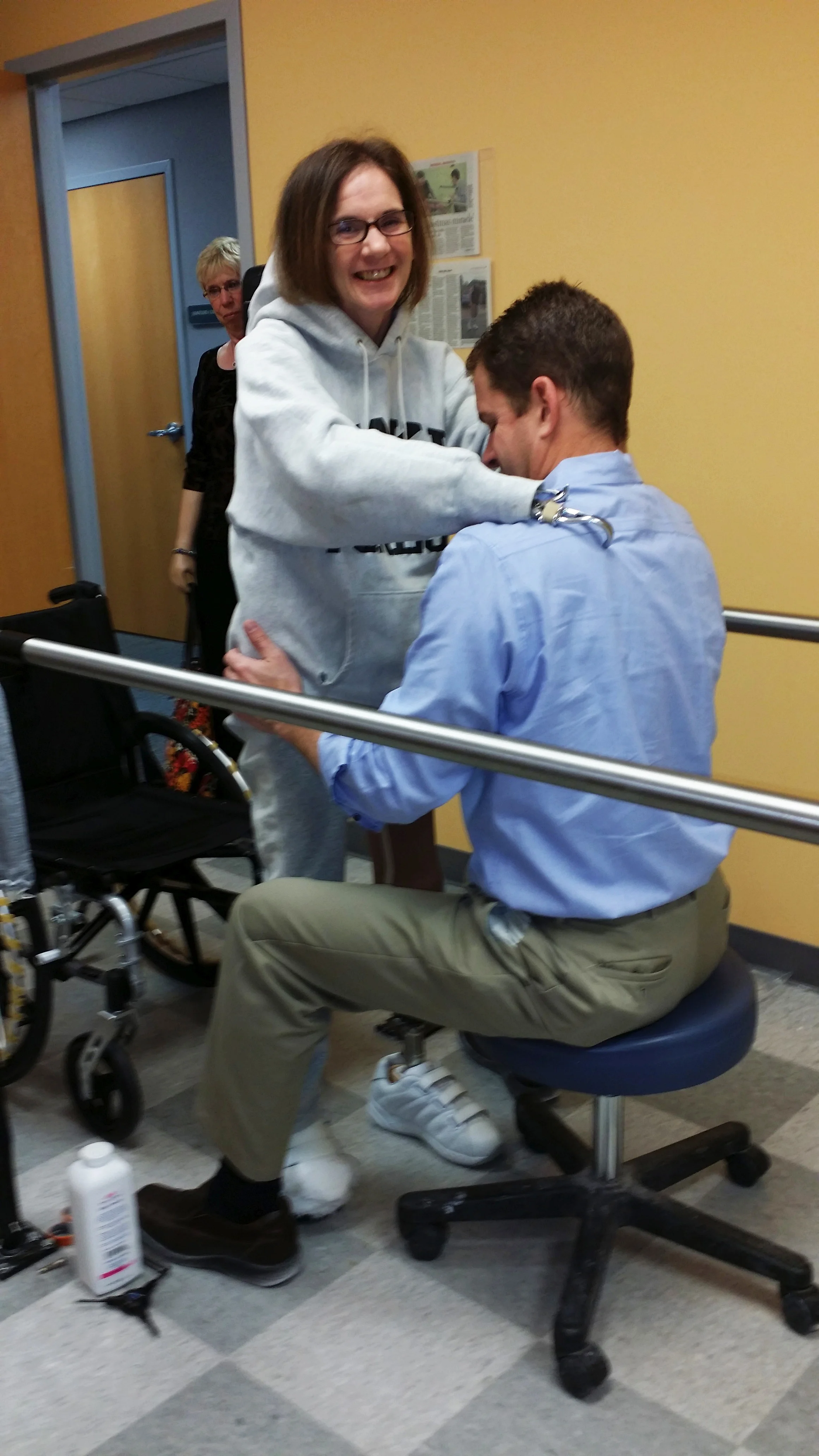
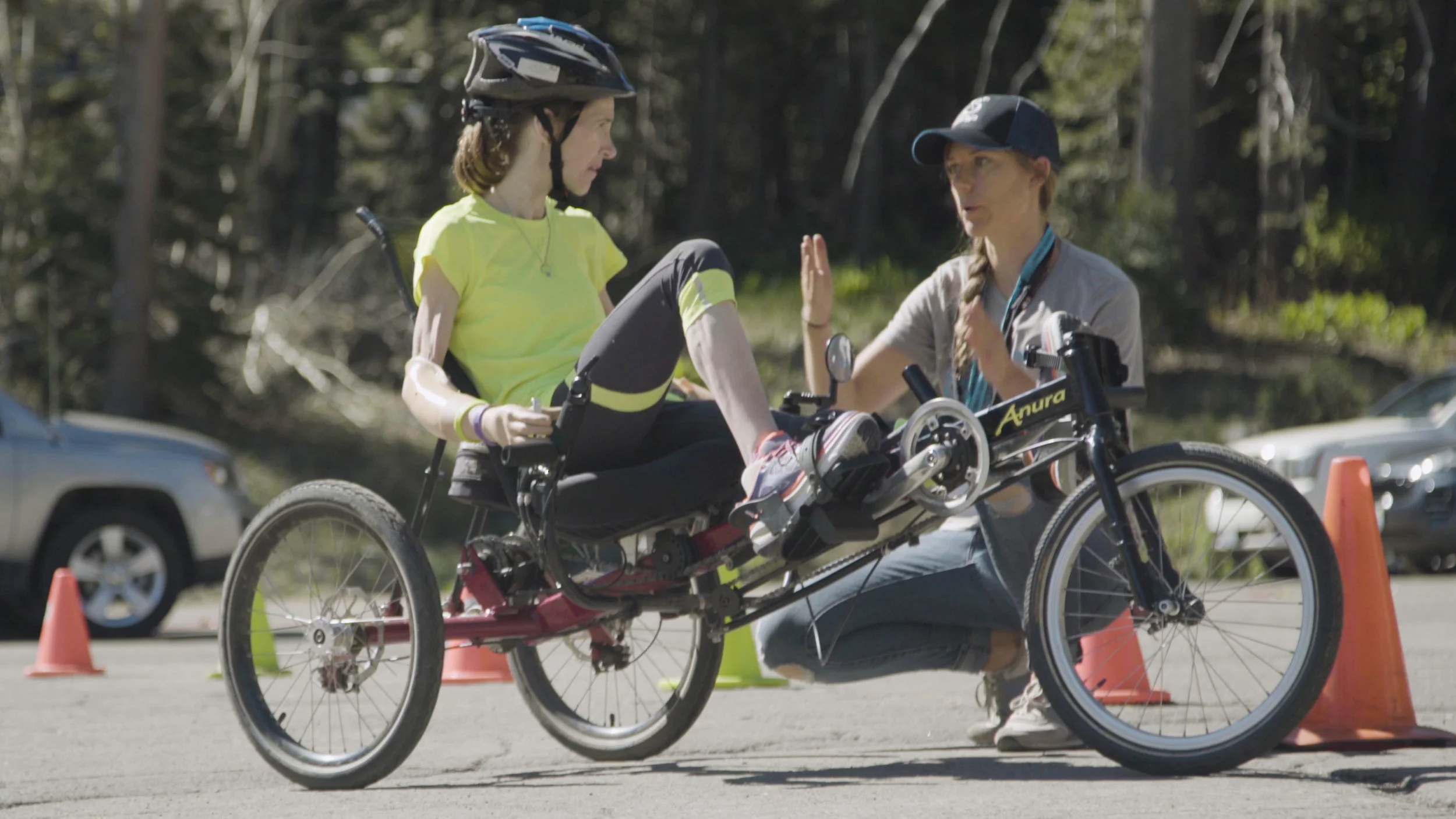
Still, if I can beat sepsis, learn to walk again, climb to the top of a rock wall, travel across the country, downhill ski, paddle board, and ride a bike along Lake Tahoe, I CAN do this. And I'll picture all of these things as I plunge back into the workforce. 

kristan walking.jpg
amputee rock climbing
amputee traveling
amputee skiing
amputee paddle boarding
amputee kayaking
amputee biking

I can DO this!

So, yes! I'm headed back to work. I'll continue to speak to larger groups, but now I'll also be working with individuals on facing their own challenges and difficulties. I'll be subletting a friend/colleague's office, and it's located exactly where I'd want it to be – downtown Matthews.

As of August 1st, "Kristan Seaford, LPC" is open for business! Which is simultaneously exciting, exhilarating, and terrifying, 

Please pray for me to attract enough clients, to help people and contribute to society, to adequately care for myself and my family, and to join my husband in financially supporting my family. Here I go.

To express an interest in individual, couples, or family counseling, click here

23 Comments