
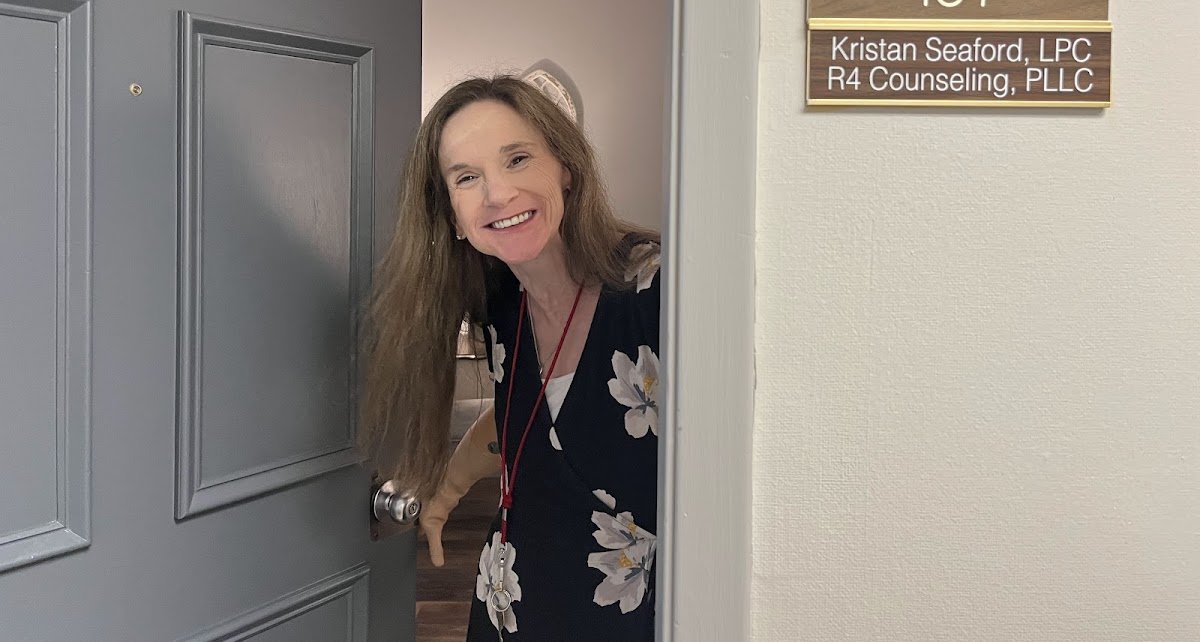
May is Mental Health Awareness Month, a time when our social feeds fill with green ribbons and reminders to "Stop the stigma against mental healthcare." However, wearing a ribbon or posting on your socials about how you support mental health isn't going to cut it.
As a therapist, I want to shout from the rooftops about all the benefits of therapy: better sleep, lower stress levels, improved physical health, more satisfying relationships, increased resilience... Need I go on? No. What I really need to do is go IN. To my own therapist's office!
Full disclosure: I cancelled my last session because I was swamped at work. That was in January. Of 2025! Yes, I know I need to go back. Not only do I need to protect my own mental health. But I also need to practice what I preach, lead by example, and spread the word: Self-care is not only "in," it's contagious! That's right: mental health is contagious!
When people think of therapy, they often imagine a "break glass in case of emergency" scenario—a last resort for when life feels like it’s unraveling. While therapy is a vital lifeline during crises, its true power lies in its ability to transform your everyday existence. It isn’t just about fixing what is broken; it’s about nurturing our psyche during both good and bad times so that we can be the the very best version of ourselves.
The Myth of the "Big Problem"
One of the most common phrases I hear in my initial consultations is, "I feel bad being here because my problems aren't as big as other people's." In fact, as a new client takes stock of my mangled body that is only completed by prosthetics, many say that I must think they are just whining.
Let’s clear that up right now: Your struggle is no bigger or smaller than mine or anyone else's! It does not need to be a catastrophe to be valid. Our struggles are big, to us, in this particular moment in time. You don’t need a clinical diagnosis or a life-altering trauma to benefit from a therapeutic space. Therapy is for anyone navigating the complexities of being alive. Whether you are struggling with a career transition, recovering from a failed relationship, feeling a "muted" sense of joy, or simply wanting to understand why you react the way you do in relationships; you deserve a space to explore that.
What Actually Happens in the Room?
Therapy provides a unique environment that you simply cannot find in your social circle. Unlike a conversation with a well-meaning friend, therapy offers:
Objectivity: A therapist has no stake in your decisions. We aren't there to tell you what to do; we are there to help you hear your own voice above the noise in the world. My job is not to tell you how to live your life, rather my job is to help you decide how you want to live your life, what you want life to look like, and then help you get there!
Pattern Recognition: We often live our lives on "autopilot." Therapy helps you identify the subconscious scripts you’ve been following—some of which may have served you as a child but are now holding you back as an adult.
Emotional Regulation: We provide a "braingym" where you can learn to sit with uncomfortable feelings like anxiety or grief without being overwhelmed by them. When we are comfortable feeling these big feelings, we can listen to and learn from them so they can inform our decisions and behavior.
Taking the First Step
If you’ve been waiting for a sign to start, let this be it. Seeking therapy isn’t an admission of weakness; it is an act of profound courage. It is an investment in the version of yourself that is yet to come—the version that is more present, more grounded, and more at peace.
This Mental Health Month, I challenge you to move beyond the hashtags. Reach out, book a consultation, and give yourself the gift of being truly heard. You are worth the work.
This Mental Health Month, I also vow to go back to my therapist's office. This therapist is in!